
16MnCr5 Case-Hardening Steel
1.7131
- EN1.7131
- EN16MnCr5
- AISI5115
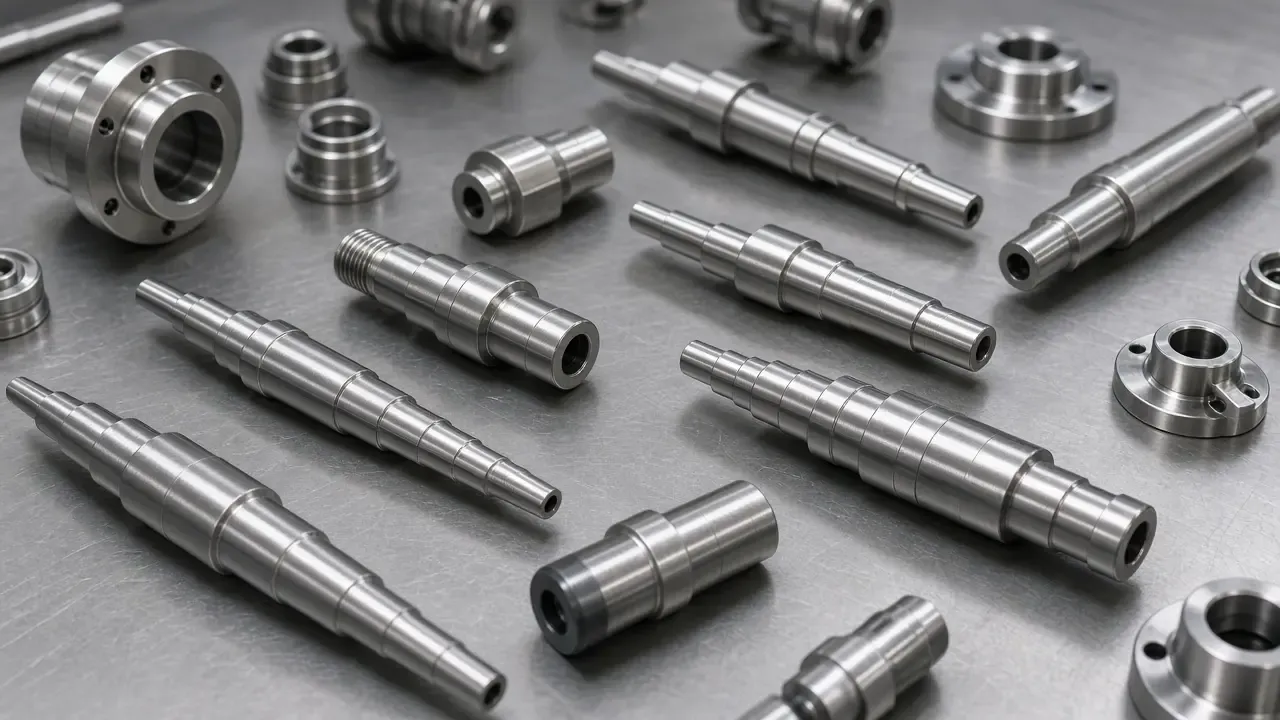
The most common case-hardening steel. After carburising it gives a hard, wear-resistant surface with a tough core; the standard choice for small and medium gears and shafts.
01Material Properties
- Surface 58–62 HRC, core Rm 800–1100 MPa
- Good machinability (soft condition)
- Low to medium hardenability; section ≤ 30 mm
- Low distortion
- Economical
02Applications
- Small and medium gears, pinions
- Shafts, pins, cams
- Chain parts
- Bearing and guide elements
- Mold pins and slides
03Delivery Condition
- Soft annealed (max. 207 HB) or +FP for machinability; peeled bar.
04Heat Treatment
Typical values
- Soft annealing
- 650–700 °C; max. 217 HB
- Carburising
- 870–970 °C; 0.5–2 mm case depth
- Hardening
- 820–860 °C, oil
- Tempering
- 150–210 °C, 1–2 h
- Surface hardness
- 58–62 HRC
- Core
- Rm ≈ 800–1100 MPa
Heat treatment cycle (schematic)
Tempering diagram (approximate)
Values are approximate and for information only; they vary with section size, heat and furnace conditions. Binding values are determined from the manufacturer’s data under laboratory conditions.
Have a material requirement?
Send us your specification, drawing or RFQ. Our team will review the requirement and identify a suitable supply option.