

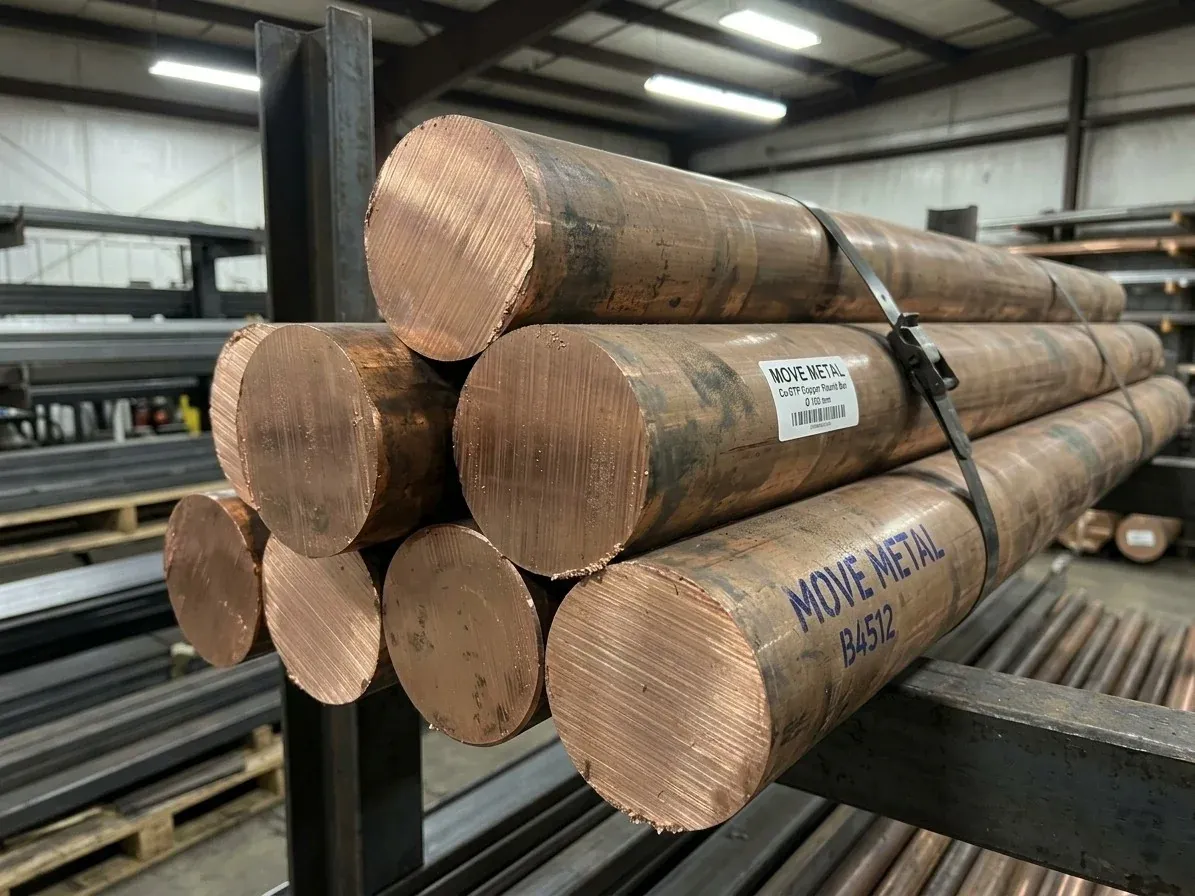
High-Strength Coppers • Aluminium & Tin Bronzes • Brasses
Copper & Copper Alloys
Copper-based materials for electrical, mechanical, wear and industrial applications. From special copper alloys combining conductivity with strength to classic bearing bronzes, sourced to specification.
01
Overview
Copper alloys are grouped by the main elements added to copper: precipitation-hardening high-strength coppers (beryllium, chromium-zirconium, nickel-silicon), copper-nickel alloys, aluminium bronzes, tin bronzes and brasses (copper-zinc). Moving from pure copper to alloyed grades, strength and wear resistance increase while electrical and thermal conductivity generally decrease. In the EN system wrought products carry the CW prefix and cast products the CC prefix; in the UNS system they are identified by C numbers. Selection weighs conductivity, hardness, sliding and wear behaviour, corrosive environment and product form together.
- Electrical conductivity is expressed in % IACS; pure copper ≈ 100 % IACS
- CuBe, CuCrZr and CuNiSi gain strength through solution treatment + ageing
- Tin and leaded bronzes suit plain bearing applications
- Aluminium bronzes offer high strength and seawater corrosion resistance
- In brasses, lead improves machinability
- Mechanical properties depend on temper / delivery condition (e.g. R codes, TF00, TQ50)
02
Material Grades
02.1
Beryllium Copper (CuBe)
CuBe2, CuCo2Be and CuCoNiBe; the highest strength among copper alloys through age hardening, good conductivity and non-sparking behaviour.
Typical applicationsPlastic mold cores and inserts, springs, electrical contacts, non-sparking tools.
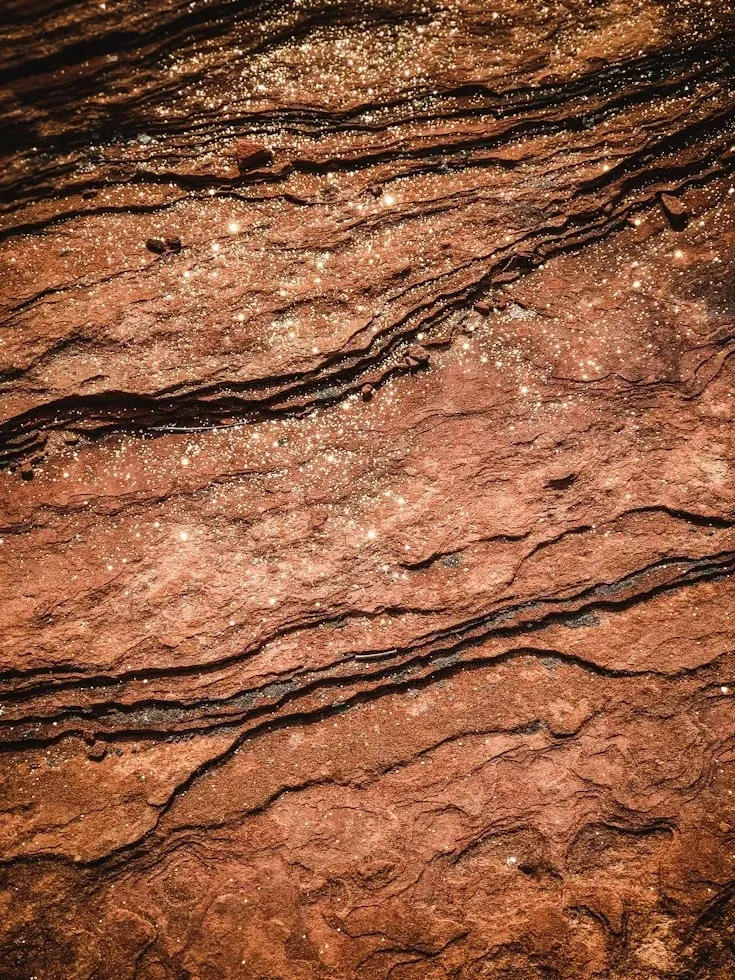
CuBe2 Beryllium Copper
CW101C·2.1247·C17200
CuBe2 (CW101C) is a copper-beryllium alloy with 1.8–2.0 % beryllium that attains high hardness through age hardening. It draws heat away quickly, suiting plastic mold inserts and hot runner nozzles, and as a non-magnetic, non-sparking alloy it is used for safety tools.
CuCo2Be
CW104C·2.1285·C17500
CuCo2Be (CW104C) is a precipitation-hardening copper alloy containing cobalt and a small amount of beryllium, classified as RWMA Class III. It is used for spot, seam and projection welding electrodes and permanent molds where conductivity and strength at temperature are needed together.
CuCoNiBe
CW103C·2.1285·C17540
CuCoNiBe (CW103C) is a beryllium copper in which part of the cobalt is replaced by nickel, giving a conductivity-strength balance close to CuCo2Be. It is chosen for resistance welding electrodes, seam welding wheels and permanent molds for non-ferrous casting.
CuBe2Pb Leaded Beryllium Copper
Available on Request
CW102C·2.1248·C17300
CuBe2Pb (CW102C / C17300) is CuBe2 with 0.2–0.6 % lead added for free machining, also known by the trade name “Alloy M25”. After ageing it reaches the same strength and hardness range as CuBe2 and is used for connectors, pins and precision parts produced in volume on automatic lathes. Supplied on request as rod and wire, solution treated or aged.
CuNi2Be Nickel Beryllium Copper
Available on Request
CW110C·2.0850·C17510
CuNi2Be (CW110C / C17510) is a precipitation-hardening, high-conductivity beryllium copper that uses nickel instead of cobalt alongside the beryllium (RWMA Class III). Aged, it combines ≈ 45–60 % IACS conductivity with moderate strength and is used for resistance welding electrodes, seam welding wheels and current-carrying parts. It should not be confused with CuCoNiBe (CW103C) or CuCo2Be (CW104C); supplied on request.
02.2
CuCrZr, CuNiSi & Other Copper Alloys
CuCrZr, CuNiSi grades, electrolytic copper (Cu-ETP), copper-nickel alloys and tungsten copper; a balance of electrical and thermal conductivity with strength.
Typical applicationsResistance welding electrodes, mold cooling inserts, electrical conductors, seawater piping, EDM electrodes.
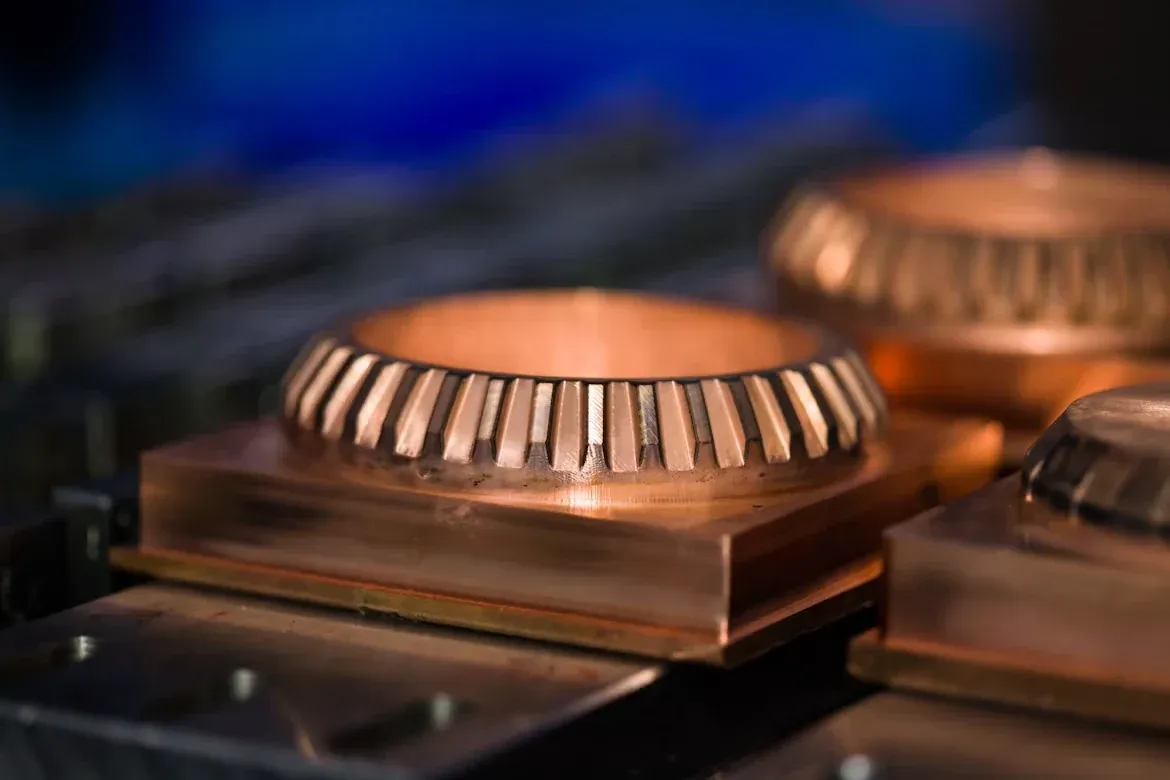
CuCrZr Chromium Zirconium Copper
CW106C·2.1293·C18150
CuCrZr (CW106C) is a precipitation-hardening copper alloyed with chromium and zirconium; it keeps a high conductivity and resists softening when hot. It is used for resistance welding electrodes, seam welding wheels, continuous casting molds and rotor bars.
CuNi2SiCr
CW111C·2.0855·C18000
CuNi2SiCr (CW111C) is an age-hardening copper alloy with nickel, silicon and a small chromium addition, offering a beryllium-free option within RWMA Class III. It is used for spot and seam welding electrodes, permanent molds and plastic mold components.
CuNi3Si Copper Alloy
CW112C·CuNi3Si1Mg·2.0857
CuNi3Si (CuNi3Si1Mg, CW112C) is a magnesium-bearing copper alloy hardened by nickel-silicon precipitates, giving about 180–230 HB and 40–50 % IACS conductivity. It is used where a beryllium-free material is required, e.g. electrode holders, mold cores and continuous casting components.
Cu-ETP / Cu-OF Electrolytic and Oxygen-Free Copper
CW004A / CW008A·C11000 / C10200·E-Cu58 / OF-Cu
Cu-ETP is electrolytic tough-pitch copper and Cu-OF its oxygen-free counterpart; both are high-purity grades used where ≥ 100 % IACS conductivity is needed, as in busbars, conductors and heat-transfer parts. The OF grade, with very low oxygen, is chosen for brazing, welding and vacuum service.
WCu Tungsten-Copper Composite
B702 Class A–D·W70Cu30, W75Cu25, W80Cu20·Class 10 / 11 / 12
WCu is a powder-metallurgy composite made by infiltrating copper into a tungsten skeleton of 65–90 % W; more tungsten means higher arc and wear resistance and lower conductivity. It is used for EDM and resistance-welding electrodes, high-voltage contacts and electronic heat sinks. Supplied to specification.
CuNi1Si Precipitation-Hardening Copper Alloy
CW109C·C19010 (yakın)·2.0853
CuNi1Si (CW109C) is a beryllium-free, low-alloy copper hardened by nickel-silicon precipitates; after ageing it provides about 45–55 % IACS conductivity and Rm 500–600 MPa. It is used for electrode holders, connectors and switchgear parts.
CuNi10Fe1Mn (90/10 Cupronickel) Copper-Nickel Alloy
CW352H·C70600·2.0872
CuNi10Fe1Mn is the 90/10 cupronickel, with iron and manganese additions tailored to seawater service; it resists corrosion, erosion and biofouling and can be welded and brazed. It is used for shipboard piping, condenser tubes and desalination plants.
CuNi30Mn1Fe (70/30 Cupronickel) Copper-Nickel Alloy
CW354H·C71500·2.0882
CuNi30Mn1Fe is the 70/30 cupronickel with 30–32 % nickel; compared with 90/10 it offers higher strength (Rm ≥ 350 MPa) and better erosion resistance at high flow velocities. It is used for high-velocity condenser tubes, pressurised seawater lines and evaporators.
Cu-OFE (C10100) Oxygen-Free Electronic Copper
Available on Request
CW009A·C10100·F68 (elektronik kalite)
Cu-OFE (CW009A, UNS C10100) is oxygen-free electronic copper with at least 99.99 % copper and no more than 5 ppm oxygen; its impurity limits, particularly for volatile elements, are much tighter than those of Cu-OF (C10200). It is used in vacuum, electron-tube, accelerator, RF and superconductor applications, and ASTM F68 microstructure testing can be specified for electronic grade.
CuCr1 Chromium Copper
Available on Request
CW105C·2.1291·C18200
CuCr1 (CW105C / C18200) is a precipitation-hardening chromium copper with 0.5–1.2 % chromium (RWMA Class II). Aged, it combines high electrical and thermal conductivity with moderate strength and is used for spot and seam welding electrodes, electrode holders and current-carrying parts. It contains no zirconium and is therefore not the same alloy as CuCrZr (CW106C / C18150); supplied on request.
02.3
Aluminium Bronzes
Bronzes alloyed with aluminium, iron and nickel; high strength, wear and seawater corrosion resistance.
Typical applicationsBushings and bearings, gears and worm wheels, valve and pump parts, marine equipment.
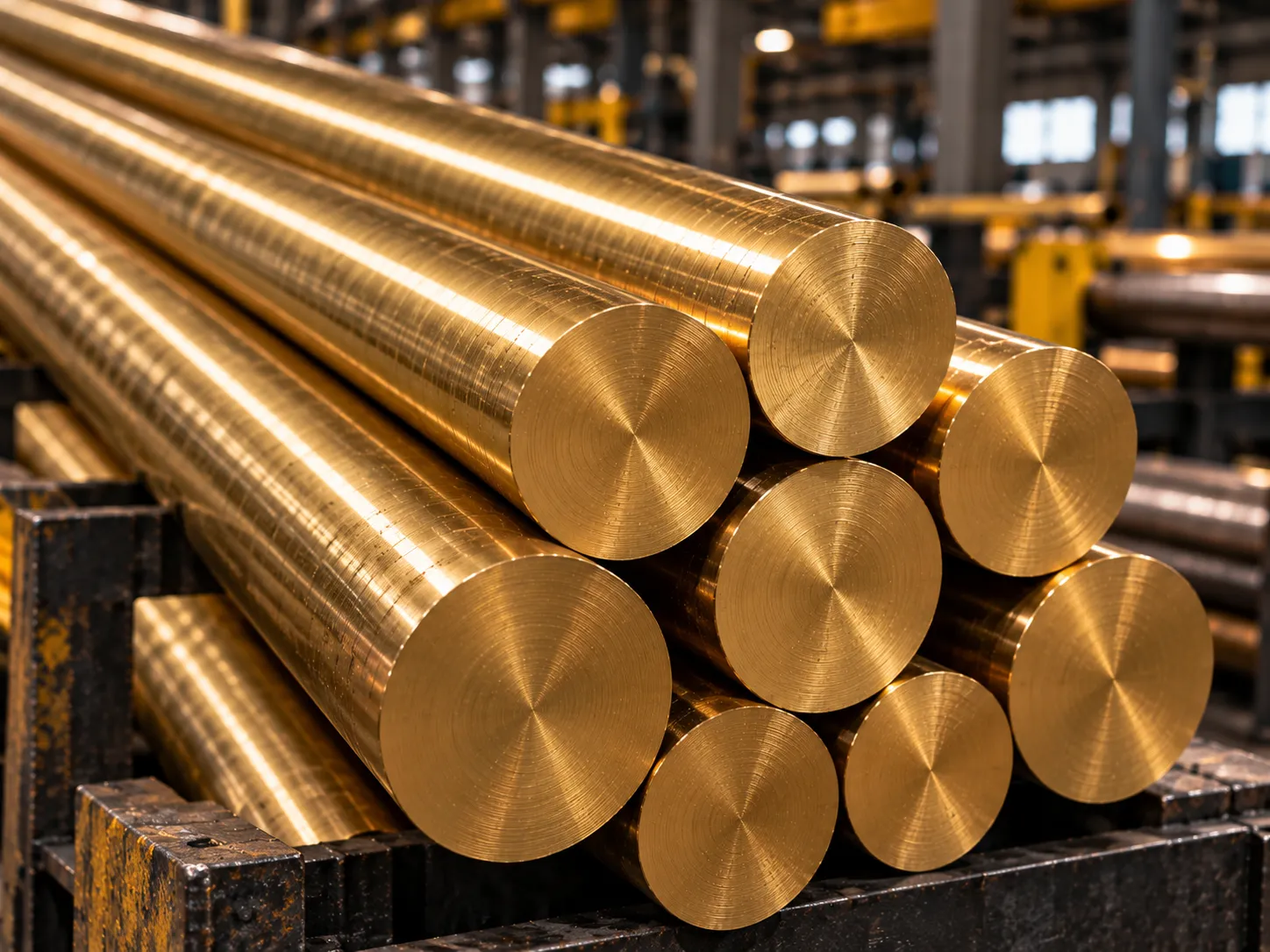
CuAl10Fe3Mn
CW306G·C62400
CuAl10Fe3Mn (CW306G) is a wrought aluminium bronze containing iron and manganese, used where strength has to be combined with wear and corrosion resistance. Typical parts are bearings, gears, worm wheels, slides and studs.
CuAl10Ni5Fe4
CW307G·C63000
CuAl10Ni5Fe4 (CW307G) is a wrought nickel aluminium bronze; the nickel and iron additions raise strength and resistance to seawater corrosion. It is used for heavily loaded bearings and gears, bending tools and gear parts in aircraft landing gear.
CuAl14Fe4Mn2
C95900
CuAl14Fe4Mn2 (UNS C95900) is a high-aluminium bronze with more than 12 % aluminium, among the hard, wear-resistant grades of this family. It is used for bending and straightening tools and for heavily loaded sliding machine parts.
CuAl9Mn2 Aluminium Bronze
2.0960·C62300 (yakın)
CuAl9Mn2 is an aluminium bronze with manganese as its main addition and low iron and nickel contents; it can be TIG/MIG welded and hot formed. It is chosen for seawater fittings, pump parts, welded bronze structures and medium-duty bushings.
CuAl11Fe6Ni6 High-Strength Nickel Aluminium Bronze
CC333G·CuAl11Fe6Ni6-C·2.0978
CuAl11Fe6Ni6 is a nickel aluminium bronze with high iron and nickel contents; after quenching and tempering it reaches 230–300 HB. It is used for deep-drawing dies for stainless sheet, worm wheels and heavily loaded wear parts.
CuAl8Fe3 Aluminium Bronze
CW303G·2.0932·C61400
CuAl8Fe3 is a wrought iron-bearing aluminium bronze whose low aluminium content keeps it single-phase (alpha); it forms and welds readily. Its resistance to seawater and acidic media suits it to heat exchanger tube sheets and chemical process equipment.
CuMn13Al8Fe3Ni2 Manganese Aluminium Bronze
CC212E (yakın) / BS CMA2·CuMn13Al8Fe3Ni2-C·2.0973 (yakın)
CuMn13Al8Fe3Ni2 is a cast aluminium bronze with 11–14 % manganese, suited to large, complex castings and repairable by welding. Its cavitation and seawater corrosion resistance make it a choice for ship propellers, large pump casings and seawater valves.
C95400 Cast Aluminium Bronze
Available on Request
C95400·B505 / B271 / B148·J461 / J462 C95400
C95400 (Cu-11Al-4Fe) is an aluminium-iron bronze produced as continuous, centrifugal and sand castings to ASTM B505, B271 and B148, used either as cast or heat treated (TQ50). Its high strength and resistance to wear and shock loading make it a common choice for heavily loaded bushings, bearings, gears and worm wheels, particularly on projects specified to US standards.
C63200 Nickel Aluminium Bronze
Available on Request
C63200·B150 / B124 / B171·Nikel-alüminyum bronzu (NAB)
C63200 (Cu-9Al-4.5Ni-4Fe) is a wrought nickel aluminium bronze to ASTM B150 and B124 with tight aluminium, iron and nickel ranges and iron held below nickel. Together with the quench-and-temper treatment (TQ50), this composition is designed to improve resistance to selective (de-aluminification) corrosion in seawater; it is used for seawater pumps, valves, shafts and fasteners. Its composition is close to C63000 (CuAl10Ni5Fe4) but it is not the same alloy; supplied on request.
02.4
Tin Bronzes
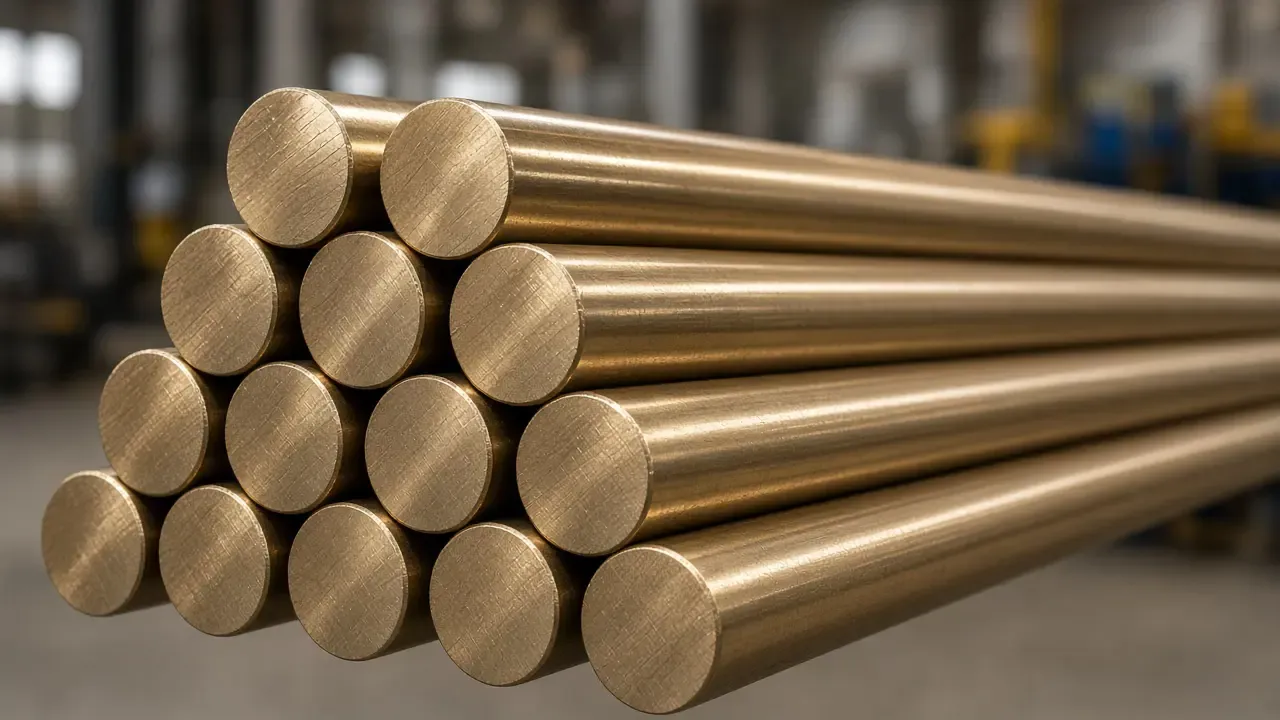
Tin and tin-lead bronzes; good sliding properties and wear resistance, cast and continuously cast bar forms.
Typical applicationsPlain bearings and bushings, worm wheels, pump and valve parts.
CuSn10
CC480K
CuSn10 (CC480K) is a cast tin bronze with 9–11 % tin, used for loaded parts because of its wear resistance and sliding properties. Main applications are heavily loaded, low-speed plain bearings, worm gears, and pump and turbine parts.
CuSn12
CC483K
CuSn12 (CC483K) is a cast tin bronze with 11–13 % tin; the higher tin content makes it harder and more wear-resistant than CuSn10. It is used for low-speed, heavily loaded bearings and for worm screws and gears exposed to seawater.
CuSn12Ni
CC484K
CuSn12Ni (CC484K) is a cast tin bronze with 11–13 % tin plus 1.5–2.5 % nickel, the nickel supporting strength and toughness under load. It is used for elevator gears and nuts, synchroniser rings and nuts that move under load.
CuSn8 Phosphor Bronze
CW453K·2.1030·C52100
CuSn8 (CW453K) is a wrought phosphor bronze with 7.5–8.5 % tin. It work-hardens during cold forming and resists fatigue and wear, which makes it a common choice for springs, bushings, plain bearings and worm wheels.
CuSn7Zn4Pb7 (Rg7) Leaded Gunmetal
CC493K·CuSn7Zn4Pb7-C·Rg7 / 2.1090
CuSn7Zn4Pb7 (Rg7, CC493K) is a leaded gunmetal with 5–8 % lead, which helps the part keep running for a while if lubrication fails and eases machining. It is a common choice for medium-duty bushings, low-pressure valve bodies and water fittings.
CuSn5Zn5Pb5 (Rg5) Leaded Gunmetal
CC491K·CuSn5Zn5Pb5-C·Rg5 / 2.1096
CuSn5Zn5Pb5 (Rg5, C83600) is a leaded gunmetal with tin, zinc and lead each in the 4–6 % range; thin-walled, complex parts are easy to cast and machine. It is used for pressure-tight valve, pump and water meter bodies.
CuSn10Pb10 High-Leaded Tin Bronze
CC495K·CuSn10Pb10-C·2.1176
CuSn10Pb10 (C93700) is a cast bearing bronze with 8–11 % lead in addition to tin; it copes with marginal lubrication and shock loads and embeds foreign particles. It suits high-speed bushings and bearings in pumps and mining plants.
CuSn6 Phosphor Bronze
CW452K·C51900·2.1020
CuSn6 (CW452K) is a wrought, phosphorus-containing tin bronze produced as wire, strip and sheet, with hardness set by cold working between R350 and R700. Its high elastic limit and fatigue strength suit it to springs, contacts, connectors and diaphragms.
CuSn7Zn2Pb3 Leaded Tin Bronze
CC492K·CuSn7Zn2Pb3-C·2.1092
CuSn7Zn2Pb3 (CC492K) is a cast tin bronze with lead limited to 2–4 %; compared with Rg7 it has higher strength (Rm ≥ 270 MPa) and wear resistance. It is used for medium- to high-load plain bearings, pressure valve bodies and steam fittings.
CuSn5 (C51000) Phosphor Bronze
Available on Request
CW451K·C51000·2.1016
CuSn5 (CW451K, UNS C51000) is a wrought, phosphorus-deoxidised tin bronze with 5 % tin (phosphor bronze), with hardness set by cold working. With slightly less tin than CuSn6 it offers somewhat better formability and conductivity at slightly lower strength, and is used for springs, contacts, connectors, bellows and diaphragms.
02.5
Brasses
Copper-zinc alloys: CuZn30 and CuZn37 forming brasses, leaded free-machining brasses (CuZn36Pb3, CuZn39Pb3, CuZn40Pb2) and the high-strength cast brass CuZn25Al5Mn4Fe3 (C86300); leaded grades offer high machinability.
Typical applicationsTurned parts, fittings, valve and fitting components, decorative parts.
CuZn39Pb3 Free-Machining Brass
CW614N·2.0401·C38500
CuZn39Pb3 (CW614N) is a free-machining brass with 2.5–3.5 % lead and serves as the 100 % reference for brass machinability ratings. It is the usual choice for high-volume turned fittings, valve bodies, screws, nuts and hydraulic connectors.
CuZn37 (Ms63) Cold-Forming Brass
CW508L·C27400·Ms63
CuZn37 (Ms63, CW508L) is a lead-free brass with 62–64 % copper. It is used where deep drawing, bending and soldering are needed, such as cartridges, terminals, radiator strip and fasteners; its machinability is lower than that of leaded brasses.
CuZn40Pb2 (Ms58) Hot-Stamping Brass
CW617N·C37700 / C38000 (yakın)·Ms58
CuZn40Pb2 (Ms58, CW617N) is an alpha-beta leaded brass intended for hot stamping; it forms readily at 650–750 °C, and its 1.6–2.5 % lead makes the forged parts easy to machine. Typical uses are valve and tap bodies and gas/water installation fittings.
C86300 High-Strength Manganese Bronze
Available on Request
C86300·CC762S / CuZn25Al5Mn4Fe3-C (yakın)·2.0598 G-CuZn25Al5 (yakın)
C86300 (CuZn25Al5Mn4Fe3) is sold as "manganese bronze" but is in fact a high-strength cast brass alloyed with aluminium, iron and manganese, in the high-strength class of cast copper alloys. It is used for bushings, bearings, nuts and gear parts running under high load at low speed, and is supplied on request as continuously cast bar, tube and sand castings.
CuZn30 (C26000) Cartridge Brass
Available on Request
CW505L·C26000·2.0265 / Ms70
CuZn30 (CW505L, UNS C26000) is a single-phase (alpha) lead-free brass with 70 % copper, known as cartridge brass (70/30). It is one of the brasses with the highest cold formability and deep-drawing capability, used for cartridge cases, radiator and heat-exchanger parts, deep-drawn shells and terminals.
CuZn36Pb3 (C36000) Free-Cutting Brass
Available on Request
CW603N·C36000 (yakın)·2.0375
CuZn36Pb3 (CW603N), with C36000 as its US counterpart, is a free-cutting brass with 2.5–3.5 % lead; C36000 is the 100 % machinability reference in the US system. Its higher copper content compared with CuZn39Pb3 gives better cold formability after machining, for crimping, bending and riveting, and it is used for high-volume turned fittings and screw-machine parts.
C46400 Naval Brass
Available on Request
C46400·CW717R / CuZn38Sn1As (yakın)·B21
C46400 (CuZn38Sn1, naval brass) is an alpha-beta brass with 0.5–1.0 % tin; the tin improves corrosion resistance in seawater and marine atmospheres compared with plain brasses. It hot forges and hot forms well and is used for marine hardware, shafts, valve stems and fasteners. Arsenical CW717R (CuZn38Sn1As, C46500) is regarded as the nearest EN equivalent; supplied on request to ASTM B21.
03
Chemical Composition
| Grade | Cu | Be | Ni | Cr | Al | Fe | Sn | Zn | Pb |
|---|---|---|---|---|---|---|---|---|---|
| Beryllium Copper (CuBe) | |||||||||
| CuBe2 Beryllium Copper | balance | 1.80–2.00 | — | — | — | — | — | — | — |
| CuCo2Be | balance | 0.40–0.70 | — | — | — | — | — | — | — |
| CuCoNiBe | balance | 0.40–0.70 | 0.80–1.30 | — | — | — | — | — | — |
| CuBe2Pb Leaded Beryllium Copper | balance | 1.80–2.00 | — | — | — | — | — | — | 0.20–0.60 |
| CuNi2Be Nickel Beryllium Copper | balance | 0.20–0.60 | 1.40–2.20 | — | — | — | — | — | — |
| CuCrZr, CuNiSi & Other Copper Alloys | |||||||||
| CuCrZr Chromium Zirconium Copper | balance | — | — | 0.50–1.20 | — | — | — | — | — |
| CuNi2SiCr | balance | — | 1.60–2.50 | 0.10–0.60 | — | — | — | — | — |
| CuNi3Si Copper Alloy | balance | — | 2.60–4.50 | — | — | — | — | — | — |
| Cu-ETP / Cu-OF Electrolytic and Oxygen-Free Copper | ≥99.90 (ETP) / ≥99.95 (OF) | — | — | — | — | — | — | — | — |
| WCu Tungsten-Copper Composite | bakiye (toz metalurjisi, infiltrasyon) | — | — | — | — | — | — | — | — |
| CuNi1Si Precipitation-Hardening Copper Alloy | balance | — | 1.0–1.6 | — | — | ≤0.2 | — | — | — |
| CuNi10Fe1Mn (90/10 Cupronickel) Copper-Nickel Alloy | balance | — | 9.0–11.0 | — | — | 1.0–2.0 | — | ≤0.5 | ≤0.02 |
| CuNi30Mn1Fe (70/30 Cupronickel) Copper-Nickel Alloy | balance | — | 30.0–32.0 | — | — | 0.4–1.0 | — | ≤0.5 | ≤0.02 |
| Cu-OFE (C10100) Oxygen-Free Electronic Copper | ≥99.99 | — | — | — | — | — | — | — | — |
| CuCr1 Chromium Copper | balance | — | — | 0.50–1.20 | — | — | — | — | — |
| Aluminium Bronzes | |||||||||
| CuAl10Fe3Mn | balance | — | — | — | 9.0–11.0 | 2.0–4.0 | — | — | — |
| CuAl10Ni5Fe4 | balance | — | 4.0–6.0 | — | 8.5–11.0 | 3.0–5.0 | — | — | — |
| CuAl14Fe4Mn2 | balance | — | ≤0.5 | — | 12.0–14.5 | 3.0–5.0 | — | — | — |
| CuAl9Mn2 Aluminium Bronze | balance | — | ≤0.8 | — | 8.0–10.0 | ≤1.5 | — | — | — |
| CuAl11Fe6Ni6 High-Strength Nickel Aluminium Bronze | balance | — | 5.0–6.5 | — | 10.5–12.0 | 5.0–6.5 | — | — | — |
| CuAl8Fe3 Aluminium Bronze | balance | — | ≤1.0 | — | 6.5–8.5 | 1.5–3.5 | — | — | — |
| CuMn13Al8Fe3Ni2 Manganese Aluminium Bronze | balance | — | 1.5–3.0 | — | 7.0–8.5 | 2.0–4.0 | — | — | — |
| C95400 Cast Aluminium Bronze | ≥83.0 | — | ≤1.5 | — | 10.0–11.5 | 3.0–5.0 | — | — | — |
| C63200 Nickel Aluminium Bronze | balance | — | 4.0–4.8 | — | 8.7–9.5 | 3.5–4.3 | — | — | — |
| Tin Bronzes | |||||||||
| CuSn10 | balance | — | ≤2.0 | — | — | — | 9.0–11.0 | ≤0.5 | ≤1.0 |
| CuSn12 | balance | — | ≤2.0 | — | — | — | 11.0–13.0 | ≤0.5 | ≤0.7 |
| CuSn12Ni | balance | — | 1.5–2.5 | — | — | — | 11.0–13.0 | ≤0.4 | ≤0.3 |
| CuSn8 Phosphor Bronze | balance | — | — | — | — | — | 7.5–8.5 | — | — |
| CuSn7Zn4Pb7 (Rg7) Leaded Gunmetal | balance | — | ≤2.0 | — | — | — | 6.0–8.0 | 2.0–5.0 | 5.0–8.0 |
| CuSn5Zn5Pb5 (Rg5) Leaded Gunmetal | balance | — | ≤2.0 | — | — | — | 4.0–6.0 | 4.0–6.0 | 4.0–6.0 |
| CuSn10Pb10 High-Leaded Tin Bronze | balance | — | ≤2.0 | — | — | — | 9.0–11.0 | ≤2.0 | 8.0–11.0 |
| CuSn6 Phosphor Bronze | balance | — | — | — | — | — | 5.5–7.0 | ≤0.2 | ≤0.02 |
| CuSn7Zn2Pb3 Leaded Tin Bronze | balance | — | ≤2.0 | — | — | — | 6.0–8.0 | 1.5–3.0 | 2.0–4.0 |
| CuSn5 (C51000) Phosphor Bronze | balance | — | — | — | — | — | 4.5–5.5 | ≤0.2 | ≤0.02 |
| Brasses | |||||||||
| CuZn39Pb3 Free-Machining Brass | 57.0–59.0 | — | — | — | — | — | — | balance | 2.5–3.5 |
| CuZn37 (Ms63) Cold-Forming Brass | 62.0–64.0 | — | — | — | — | ≤0.1 | — | balance | ≤0.1 |
| CuZn40Pb2 (Ms58) Hot-Stamping Brass | 57.0–59.0 | — | — | — | ≤0.05 | ≤0.3 | — | balance | 1.6–2.5 |
| C86300 High-Strength Manganese Bronze | 60.0–66.0 | — | ≤1.0 | — | 5.0–7.5 | 2.0–4.0 | ≤0.20 | 22.0–28.0 | ≤0.20 |
| CuZn30 (C26000) Cartridge Brass | 69.0–71.0 | — | — | — | — | ≤0.05 | — | balance | ≤0.05 |
| CuZn36Pb3 (C36000) Free-Cutting Brass | 60.0–62.0 | — | ≤0.3 | — | — | ≤0.3 | ≤0.2 | balance | 2.5–3.5 |
| C46400 Naval Brass | 59.0–62.0 | — | — | — | — | ≤0.10 | 0.50–1.00 | balance | ≤0.20 |
Values in wt. %; ranges per each grade’s reference standard. The full list and reference standard are on the grade page. The analysis on the material certificate governs on delivery.
04
Mechanical Properties
Standard minimum (≥) or typical (≈) values for representative grades. In copper alloys, mechanical properties vary markedly with delivery condition (temper designation, ageing, casting method) and section size.
| Grade | Condition | Tensile strength Rm (MPa) | Yield strength Rp0.2 (MPa) | Elongation A (%) | Hardness |
|---|---|---|---|---|---|
| Cu-ETP / Cu-OF | Soft – hard (R200–R300) | 200–350 | — | — | — |
| CuBe2 | Aged (AT / TF00) | ≈ 1140–1380 | ≈ 1000–1200 | ≈ 3–10 | ≈ 36–42 HRC |
| CuCo2Be | Aged (TF00) | ≈ 690–900 | ≈ 550–760 | ≈ 10–25 | ≈ 200–240 HB |
| CuCrZr | Solution treated + aged | — | — | — | ≈ 140–180 HB |
| CuNi1Si | Precipitation hardened | 500–600 | — | — | 150–190 HB |
| CuNi10Fe1Mn | Annealed (R290) | ≥ 290 | ≥ 90 | ≥ 30 | — |
| CuAl11Fe4 (C95400) | As cast | ≥ 585 | ≥ 220 | ≥ 12 | ≈ 170 HB |
| CuAl11Fe4 (C95400) | Quench and tempered (TQ50) | ≥ 655 | ≥ 310 | ≥ 10 | ≈ 190–200 HB |
| CuAl11Fe6Ni6 | Heat treated | 680–750 | — | — | 230–300 HB |
| CuSn10Pb10 | Cast | ≥ 220 | — | — | 65–75 HB |
| CuZn25Al5Mn4Fe3 (C86300) | As cast | ≥ 758 | ≥ 414 | ≥ 12 | ≈ 225 HB |
| CuZn39Pb3 | Extruded / drawn (R360) | ≥ 360 | — | — | — |
Values are approximate or minimum; cells marked "—" depend strongly on temper and size. The applicable specification and the material certificate govern for orders.
05
Physical Properties
Approximate values at room temperature. Electrical and thermal conductivity vary with alloy content, temper and ageing condition.
| Grade / group | Density (g/cm³) | Modulus of elasticity (GPa) | Thermal conductivity (W/m·K) | Electrical conductivity (% IACS) | Thermal expansion (10⁻⁶/K, 20–300 °C) |
|---|---|---|---|---|---|
| Cu-ETP / Cu-OF / Cu-OFE | 8.94 | ≈ 117 | ≈ 390 | ≥ 100 | ≈ 17.7 |
| CuBe2 | ≈ 8.3 | ≈ 130 | ≈ 105–130 | ≈ 22–28 | ≈ 17.5 |
| CuCo2Be / CuCoNiBe | ≈ 8.8 | ≈ 130–138 | ≈ 200–250 | ≈ 45–50 | ≈ 17.6 |
| CuCrZr | ≈ 8.9 | ≈ 125 | ≈ 320 | ≈ 75–85 | ≈ 17.6 |
| CuNi10Fe1Mn | ≈ 8.9 | ≈ 125–135 | ≈ 40–50 | ≈ 9 | ≈ 17 |
| CuAl10Ni5Fe4 | ≈ 7.6 | ≈ 115–120 | ≈ 40 | ≈ 7 | ≈ 16 |
| CuSn10Pb10 | ≈ 8.9 | ≈ 75–80 | ≈ 47 | ≈ 10 | ≈ 18.5 |
| CuZn39Pb3 | ≈ 8.5 | ≈ 97 | ≈ 120 | ≈ 26–28 | ≈ 20.9 |
% IACS: conductivity relative to the International Annealed Copper Standard; 100 % IACS ≈ 58 MS/m. The applicable specification and the material certificate govern for orders.
06
Applications
- Plastic molds: cores, inserts and cooling components (CuBe, CuCoNiBe, CuNiSi)
- Resistance welding: electrodes, electrode holders and arms (CuCrZr, CuCo2Be, CuNi2SiCr)
- Electrical and power: busbars, conductors, contacts and connectors
- Electronics and vacuum: vacuum components, RF and accelerator parts (Cu-OFE)
- Machine building: plain bearings, bushings, worm wheels (tin and aluminium bronzes)
- Heavy-duty applications: highly loaded bushings, wear plates and guides (C86300, C95400)
- Marine: seawater piping, pump and valve parts (CuNi, aluminium bronzes)
- Turned parts, valve and fitting components, fasteners (leaded brasses)
- Explosive atmospheres: non-sparking hand tools (CuBe)
- EDM and arcing contacts: tungsten copper (WCu) electrodes
07
Product Forms & Delivery Conditions
Product forms
- Round bar
- Flat bar
- Plate
- Sheet / strip
- Wire
- Tube / hollow bar
- Castings
- Cut-to-size
Available forms vary by alloy and dimension.
Delivery conditions
- Soft annealed or cold worked (e.g. R200–R300; Cu-ETP)
- Solution annealed (TB00 / A) or mill hardened (TF00 / AT, TH04); beryllium copper
- Solution treated + aged (CuCrZr, CuNiSi)
- Tempers from soft to spring hard (tin bronze strip and wire, brass)
- Extruded / drawn (M, R360–R500; free-machining brasses)
- As cast: continuous cast (GC), sand cast (GS), centrifugal cast (GZ)
- Quench and tempered aluminium bronze (TQ50; C95400)
- Sintered / infiltrated (WCu)
08
Applicable Standards & Certification
Product standards and specifications
- EN 12163 — Rod for general purposes
- EN 12164 — Rod for free machining purposes
- EN 12165 — Wrought and unwrought forging stock
- EN 1652 — Plate, sheet, strip and circles
- EN 13601 — Rod, bar and wire for electrical purposes
- EN 12449 / EN 12451 — Seamless tubes (general purposes / heat exchangers)
- EN 1982 — Ingots and castings
- ASTM B505 / B584 / B271 — Continuous, sand and centrifugal castings
- ASTM B196 / B150 / B16 — Beryllium copper, aluminium bronze and free-cutting brass rod
- ISO 5182 / RWMA classes — Resistance welding electrode materials
Certification and inspection documents
- EN 10204 3.1 inspection certificate
- EN 10204 3.2 (on request, third party)
- Chemical analysis (spectrometric) and PMI
- Electrical conductivity measurement (% IACS / MS/m)
- Hardness and tensile testing
- Ultrasonic testing (on request)
- RoHS / REACH compliance declaration (on request)
A product specification and an inspection document are different things: e.g. AMS 4928 is a product specification, EN 10204 3.1 is a type of inspection document; one does not replace the other.
Alloy selection by application
In copper alloys, conductivity, hardness, wear resistance and corrosion behaviour can work against each other. We support alloy selection based on load, speed, temperature and environment.
Material Availability & Supply Capability
Move Metal is not a producer; we focus on technical supply and international sourcing. The supply status of each grade is shown with the statuses below; a grade listed on the site does not mean it is held in stock.
- Regular Supply
- Materials with an established supply relationship, available for recurring requirements.
- Available on Request
- Materials sourced on request through our international producer and supplier network.
- Special Sourcing
- Requirements calling for special dimensions, certification or producer approval, sourced individually.
- Under Development
- Materials we are working to bring into our supply scope.
Please Include
- Alloy and standard (EN / ASTM / UNS)
- Temper or heat-treatment condition
- Product form, dimensions and tolerance
- Quantity
- Conductivity, hardness or mechanical property requirements
- Testing and certification requirements
Have a material requirement?
Send us your specification, drawing or RFQ. Our team will review the requirement and identify a suitable supply option.