
CuCr1 Chromium Copper
CuCr1
Available on Request
- ENCW105C
- DIN2.1291
- UNSC18200
- RWMAClass II
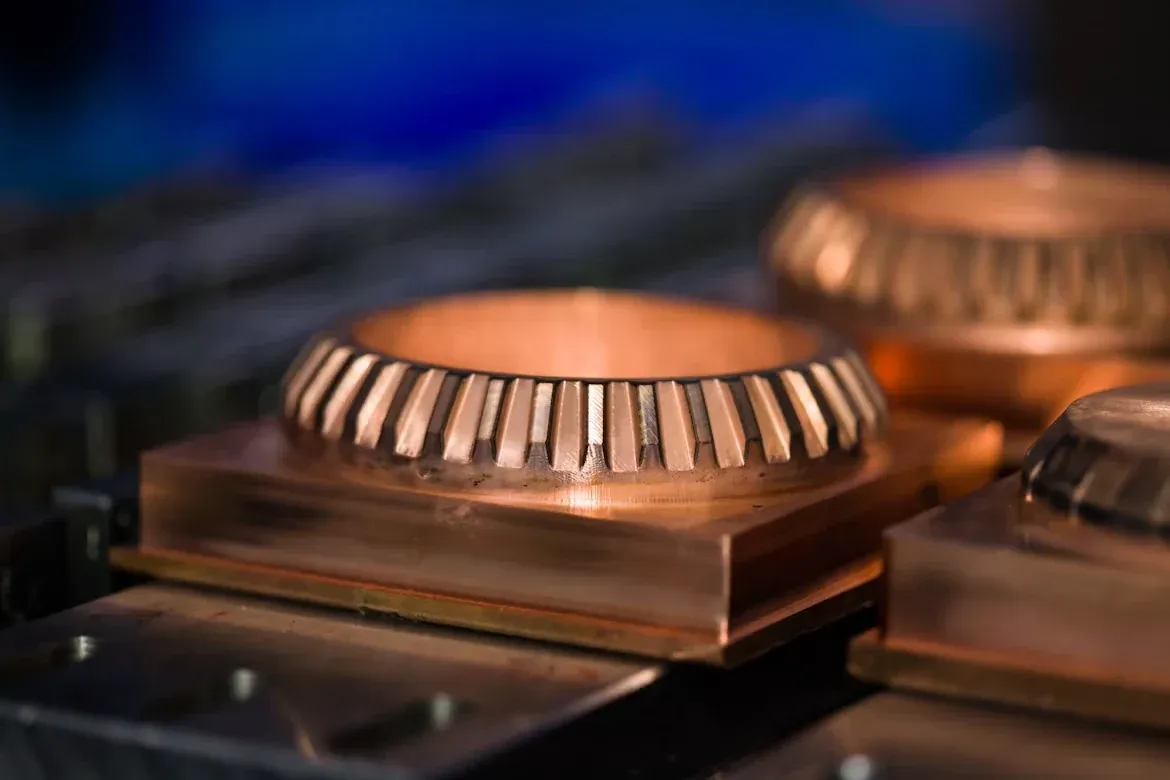
CuCr1 (CW105C / C18200) is a precipitation-hardening chromium copper with 0.5–1.2 % chromium (RWMA Class II). Aged, it combines high electrical and thermal conductivity with moderate strength and is used for spot and seam welding electrodes, electrode holders and current-carrying parts. It contains no zirconium and is therefore not the same alloy as CuCrZr (CW106C / C18150); supplied on request.
Spectral Analysis
wt. % · EN 12163 (CW105C) ranges- Cu
- balance
- Cr
- 0.50–1.20
Typical ranges according to the standard, for information only. The analysis on the material certificate applies on delivery.
01Material Properties
- Aged and cold drawn: typical Rm ≈ 400–500 MPa (depending on size)
- Electrical conductivity ≈ 75–85 % IACS
- High thermal conductivity
- Resists softening below the ageing temperature; elevated-temperature strength is lower than CuCrZr
- Non-magnetic
- Moderate machinability
02Applications
- Electrodes and caps for spot welding low-carbon and coated steels
- Seam welding wheels
- Electrode holders and welding arms
- Contacts and current-carrying parts in switchgear
- Rotor bars and short-circuit rings in electric motors
- Cooled components that must remove heat
03Delivery Condition
- Rod, bar, plate and forgings; sizes and forms are reviewed on request.
- Solution treated and aged (and cold worked).
- Hardness and conductivity values are stated on the material certificate.
04Heat Treatment
Heat Treatment Steps
Ageing conditions are chosen for the section size and the required hardness / conductivity balance; values are typical ranges.
05Applicable Standards & Specifications
- EN 12163 — Copper and copper alloys; rod for general purposes (CW105C)
- EN 12420 — Copper and copper alloys; forgings (CW105C)
- RWMA Class II — Resistance welding electrode material class
A product specification and an inspection document are different things: e.g. AMS 4928 is a product specification, EN 10204 3.1 is a type of inspection document; one does not replace the other.
06Is there a better material?
Grades in the same material family as CuCr1 with higher wear resistance and higher impact resistance (toughness); up to two suggestions under each heading. Which one fits depends on the application's priority requirement.
Higher wear resistance
- CuNi2SiCr
Wear resistance: Low → Medium
Trade-off: Conductivity
- CuNi3Si Copper Alloy
Wear resistance: Low → Medium
Trade-off: Conductivity
Higher impact resistance (toughness)
Our list has no grade with higher impact resistance (toughness) than CuCr1 without a marked trade-off in its other critical properties.
Suggestions are based on the critical property levels in our grade data; an improvement in one property may require a trade-off in another. The final selection must be made by technical evaluation against operating conditions, heat treatment and specification.
For more information, browse our Technical Insights07Move Metal Supply Options
Move Metal is not a producer; we source the grade to your specification through our international producer and supplier network. Dimensions, quantity, delivery condition and documentation requirements are reviewed together.
Product forms
- Round bar
- Flat bar
- Plate
- Sheet / strip
- Wire
- Tube / hollow bar
- Castings
- Cut-to-size
Documents and testing
- EN 10204 3.1 inspection certificate
- EN 10204 3.2 (on request, third party)
- Chemical analysis (spectrometric) and PMI
- Electrical conductivity measurement (% IACS / MS/m)
- Hardness and tensile testing
Supply status: Available on Request
Request CuCr1 QuotationNot sure if CuCr1 is the right material for your application?
Evaluate candidate materials by application, operating conditions and priority properties with the Material Selection Guide.
Find the Right MaterialGrades in the Same Group
Back to GroupTechnical resources for this material
Have a material requirement?
Send us your specification, drawing or RFQ. Our team will review the requirement and identify a suitable supply option.