
M42 High-Speed Steel
1.3247 (M42)
Sourced upon request
- EN1.3247
- ENHS2-9-1-8
- AISIM42
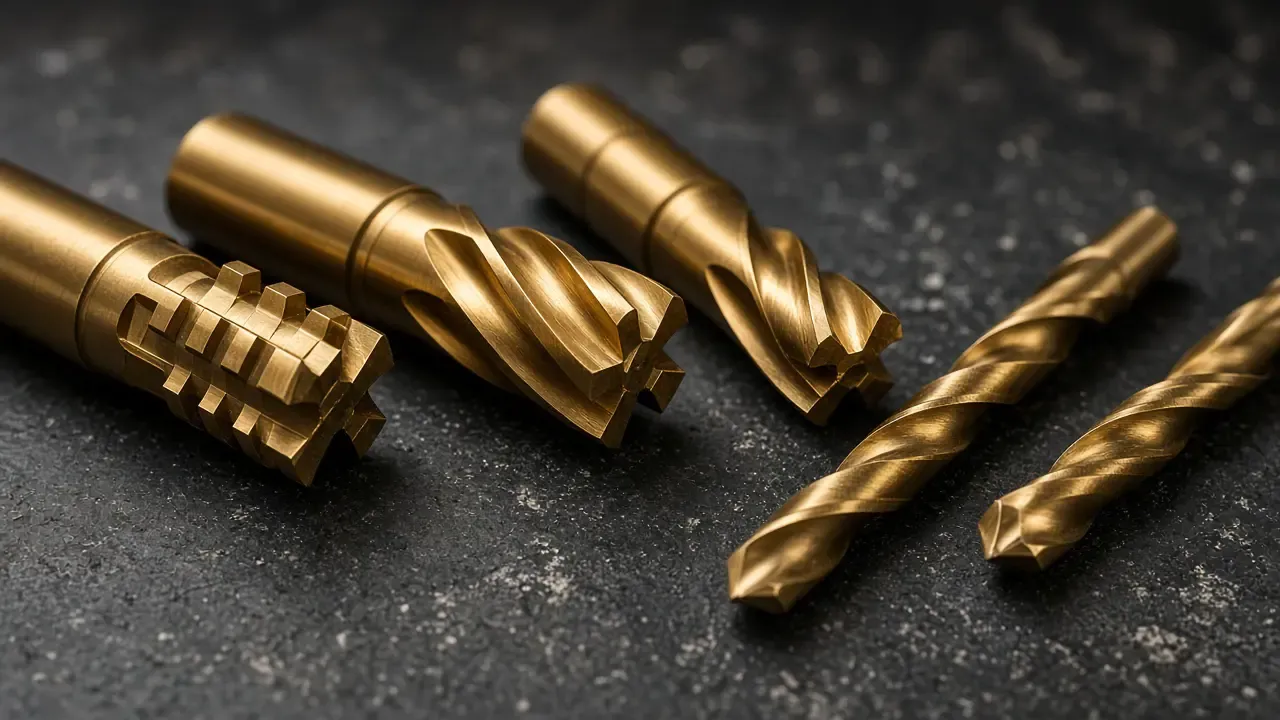
Molybdenum-based super high-speed steel with 8% cobalt. Hardens to 66–70 HRC; hot hardness and wear resistance exceed M2 and M35. Preferred for cutting hard and difficult-to-machine materials. Sourced upon request.
01Material Properties
- Superior hot hardness thanks to high cobalt content
- Working hardness 66–70 HRC
- High wear resistance
- Lower toughness than M2; care needed in interrupted cutting
- Suitable for PVD coating
02Applications
- Machining of hard and heat-treated materials
- Drills and end mills for stainless and titanium alloys
- Taps, reamers, broaches
- High-performance saw blades
03Delivery Condition
- Annealed approx. 260–300 HB; 66–70 HRC after heat treatment
04Heat Treatment
Typical values
- Soft annealing
- 800–850 °C; max. 300 HB
- Stress relieving
- 600–650 °C
- Preheating
- Three stages: 450–550 °C, 850 °C, 1050 °C
- Hardening
- 1170–1200 °C; short soak (80–150 s)
- Quenching medium
- 500–550 °C salt bath + air; pressurised gas in vacuum
- Tempering
- 540–560 °C, three times, 1–2 h
- Working hardness
- 66–68 HRC
- Note
- Protective atmosphere/vacuum against decarburisation
Heat treatment cycle (schematic)
Tempering diagram (approximate)
Values are approximate and for information only; they vary with section size, heat and furnace conditions. Binding values are determined from the manufacturer’s data under laboratory conditions.
Have a material requirement?
Send us your specification, drawing or RFQ. Our team will review the requirement and identify a suitable supply option.