
1.2767
- EN1.2767
- ENX45NiCrMo4
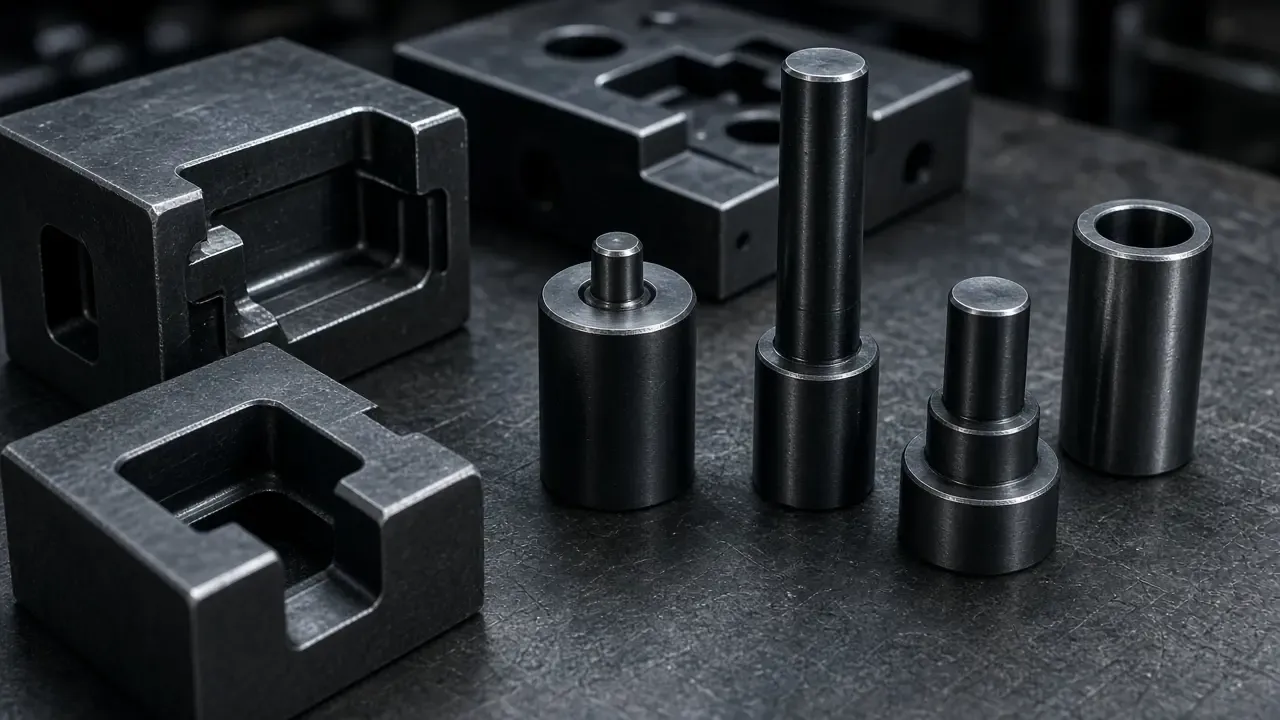
High-toughness nickel-alloyed shock steel used for cutting and forming thick sheet.
01Material Properties
- High toughness
- Nickel-alloyed shock-resisting steel
- High hardenability
- Polishable
02Applications
- Cutlery (fork and spoon) dies
- Scrap shear blades
- Cutting and bending of thick sheet
- Cold forging and forming dies
03Heat Treatment
Typical values
- Soft annealing
- 610–650 °C; max. 262 HB
- Stress relieving
- 550–600 °C
- Preheating
- 600–650 °C
- Hardening
- 840–870 °C; 15–30 min
- Quenching medium
- Oil or air; 180–220 °C salt bath
- As-quenched hardness
- ≈ 55–57 HRC
- Tempering
- 150–250 °C → 52–55 HRC; for toughness 500–550 °C → ≈ 44 HRC
- Working hardness
- 48–54 HRC
- Note
- Uniform through-hardening in deep sections (Ni)
Heat treatment cycle (schematic)
Tempering diagram (approximate)
Values are approximate and for information only; they vary with section size, heat and furnace conditions. Binding values are determined from the manufacturer’s data under laboratory conditions.
Have a material requirement?
Send us your specification, drawing or RFQ. Our team will review the requirement and identify a suitable supply option.